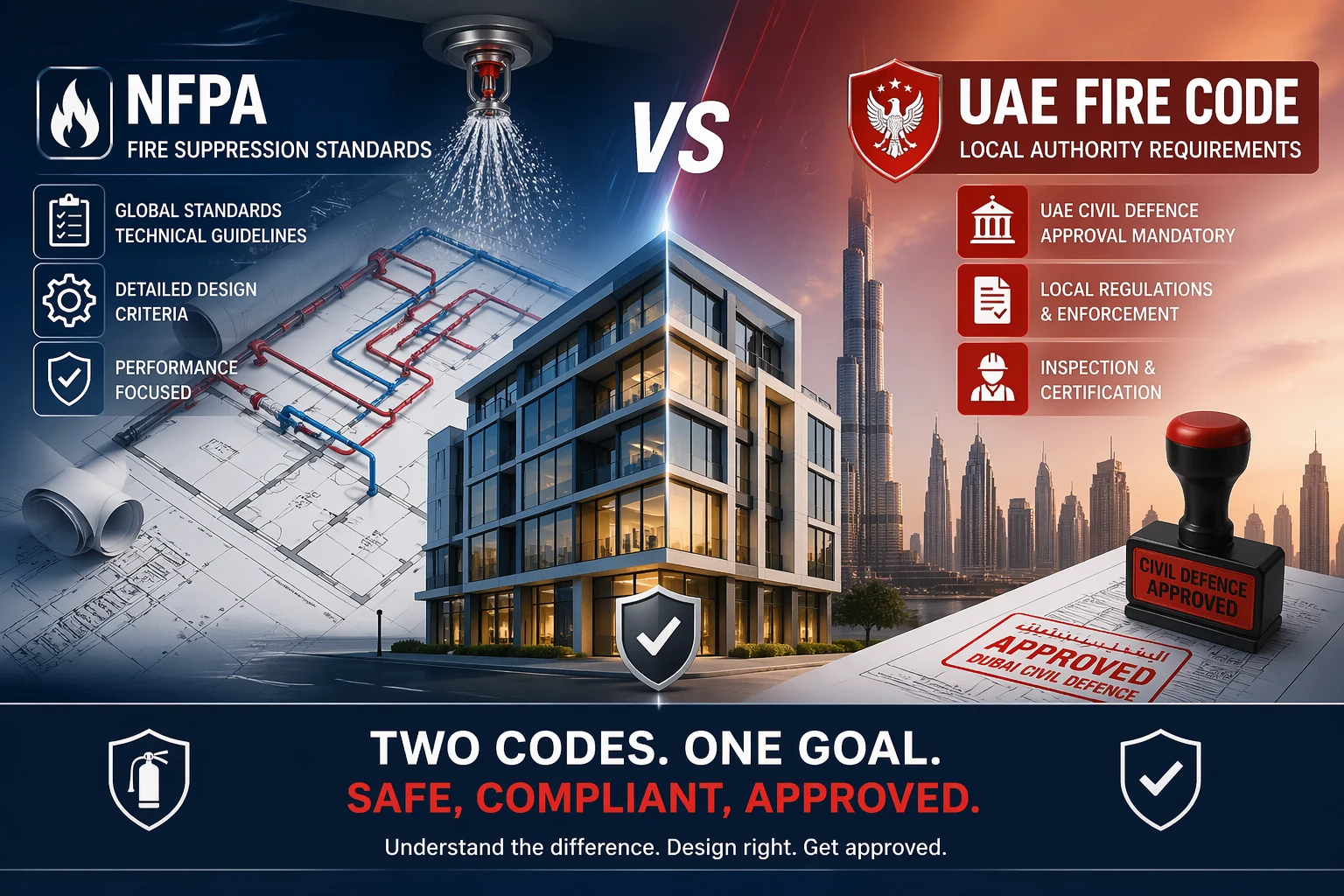
На быстро развивающемся рынке, таком как ОАЭ, понимание того, какой противопожарный кодекс регулирует ваш проект, имеет решающее значение для предотвращения перепроектирования, задержек с получением разрешений и дополнительных затрат. Распространенной проблемой является согласование стандартов NFPA (Национальная ассоциация противопожарной защиты) и противопожарных кодексов ОАЭ, особенно когда оба упоминаются в проектной документации. Широко признанные стандарты NFPA по пожаротушению предоставляют подробные технические рекомендации, но власти ОАЭ применяют собственную обязательную систему согласования. Это создает неопределенность для инженеров и подрядчиков, работающих над сложными проектами. Четкое понимание того, как оба кодекса соотносятся друг с другом, помогает оптимизировать проектные решения, снизить риски несоответствия и обеспечить более плавное получение разрешений на разных этапах проекта.
В проектах, соответствующих стандартам NFPA по пожаротушению, компания LIFECO играет ключевую роль в предоставлении решений, отвечающих как рекомендациям NFPA, так и требованиям Пожарного кодекса ОАЭ, обеспечивая беспрепятственное получение разрешений и надежную работу системы.
Оглавление
ПереключатьСравнение стандартов NFPA и противопожарного кодекса ОАЭ: стратегический обзор глобальных и региональных рамок.
Системы пожаротушения зависят от четких и структурированных правил, защищающих жизни и имущество. Эти нормы регулируют каждый этап, от проектирования до окончательного утверждения. В ОАЭ применение правильной нормативной базы имеет решающее значение для бесперебойного выполнения проекта. Многие предприятия сталкиваются с путаницей при работе с противопожарными нормами NFPA и ОАЭ, особенно в проектах с участием международных заинтересованных сторон.
Однако противопожарный кодекс ОАЭ адаптирован к местным рискам, типам зданий и требованиям властей. Понимание стандартов пожарной безопасности, сравнение стандартов ОАЭ и NFPA помогает командам согласовывать свои проекты как с глобальными ожиданиями, так и с местными требованиями. Влияние международных противопожарных кодексов ОАЭ можно увидеть в современной инфраструктуре. Тем не менее, эти кодексы всегда должны соответствовать правилам ОАЭ, чтобы получить одобрение. Этот баланс определяет, как проекты продвигаются в регионе.
Стандарты NFPA по пожаротушению и их глобальное применение
Стандарты NFPA широко используются во многих странах. Они предлагают подробные рекомендации по проектированию, монтажу и тестированию систем. Инженеры часто полагаются на них для обеспечения согласованности в многонациональных проектах. Во многих проектах в ОАЭ стандарты NFPA упоминаются в качестве вспомогательного стандарта. Однако их использование зависит от того, насколько хорошо они соответствуют ожиданиям местных властей и процессам утверждения.
Требования противопожарного кодекса ОАЭ и структура местного контроля за их соблюдением.
Противопожарный кодекс ОАЭ обязателен для всех проектов на территории страны. Власти рассматривают проекты на основе строгих критериев соответствия. Это включает в себя компоновку систем, утверждение материалов и меры безопасности. Инженеры должны убедиться, что каждая деталь соответствует местным нормам, чтобы избежать задержек или переделок во время проверок и согласований.
Разбираемся в различиях между стандартами NFPA и противопожарными нормами ОАЭ для систем пожаротушения.
Правила пожаротушения различаются в зависимости от региона, и понимание требований к системам пожаротушения в соответствии с противопожарными нормами ОАЭ помогает избежать дорогостоящих ошибок. Инженеры часто сравнивают мировые практики, чтобы понять разницу между стандартами NFPA и противопожарными нормами ОАЭ для систем пожаротушения в реальных проектах. Различия между стандартами NFPA и противопожарными нормами ОАЭ влияют на плотность застройки, получение разрешений и документооборот. Местные власти проводят строгие проверки, поэтому планы должны соответствовать правилам ОАЭ до начала монтажа. Четкая координация между консультантами и подрядчиками обеспечивает соответствие требованиям и сокращает количество изменений во время проверок и окончательного утверждения. Это делает проекты эффективными и полностью согласованными.
И стандарты NFPA, и стандарты ОАЭ направлены на снижение пожарной опасности и повышение надежности систем. Их общая цель — защита жизни и имущества. Хотя методы могут различаться, оба стандарта ориентированы на эффективность, безопасность и долгосрочную действенность систем пожаротушения.
Вот наглядное сравнение стандартов NFPA и противопожарного кодекса ОАЭ на практике при реализации проектов.
| Область | Стандарты NFPA | Пожарный кодекс ОАЭ |
|---|---|---|
| Власть | Международные стандарты (NFPA – стандарты, разработанные в США) | Местные власти (обязательные правила гражданской обороны ОАЭ) |
| Статус проектов в ОАЭ | Эталонный стандарт (только для вспомогательной роли) | Обязательно для утверждения и исполнения. |
| Подход к проектированию | Гибкие инженерные рекомендации, основанные на оценке рисков | Нормативные требования + требования, определяемые полномочиями |
| Требование об утверждении | Одного этого недостаточно для одобрения. | Необходимо для утверждения гражданской обороной. |
| Фокус на проектировании системы | Производительность и инженерная гибкость | Соблюдение местных правил техники безопасности |
| Документация | Технические рекомендации по проектированию | Строгий контроль за подачей и утверждением документации. |
| Процесс проверки | Внутренняя/проектная проверка | Официальная инспекция и сертификация гражданской обороны. |
| Применение в проектах ОАЭ | Используется на этапе проектирования для внедрения передовых методов. | Используется для окончательного утверждения и проверки соответствия требованиям. |
| Риск конфликта | Низкий уровень сам по себе, но может вступать в конфликт при неправильном применении. | Высокий уровень, если используется стандарт NFPA без согласования с ОАЭ. |
Стандарты проектирования и монтажа – Какой противопожарный кодекс применяется в Дубае (NFPA) или в ОАЭ?
Проекты в Дубае должны в первую очередь соответствовать правилам местных властей, даже если используются международные стандарты. Команды приводят проекты в соответствие со стандартами противопожарной защиты Дубая, чтобы получить необходимые разрешения. Оценка применимости стандартов NFPA в Дубае помогает в сложных проектах, обеспечивая при этом строгое соблюдение требований противопожарной защиты, получение разрешений и соблюдение сроков завершения проекта без задержек.
Проектирование спринклерных систем в соответствии со стандартами пожаротушения NFPA и нормами ОАЭ.
Проектирование спринклерных систем различается в зависимости от международных и местных норм, что влияет на производительность системы и процессы утверждения. Стандарты NFPA фокусируются на классификации опасностей и расчетах плотности, в то время как нормы ОАЭ включают дополнительные требования регулирующих органов. Инженеры должны тщательно сбалансировать оба подхода, чтобы гарантировать соответствие проектов требованиям безопасности, прохождение проверок регулирующих органов и избежание дорогостоящих перепроектирований на этапах реализации проекта.
Системы пожаротушения с использованием чистых агентов – соблюдают ли ОАЭ стандарты NFPA по пожаротушению?
Системы с использованием чистых агентов часто ссылаются на международные руководства, однако власти ОАЭ предъявляют конкретные требования к соответствию. Стандарт NFPA предоставляет подробные проектные рамки, но местные правила определяют границы утверждения. Инженеры должны проверять совместимость обоих стандартов, обеспечивая соответствие выбора системы, расчетов выбросов и мер безопасности требованиям ОАЭ, одновременно согласуясь с общепринятыми в мире инженерными практиками.
Конфликты в сфере регулирования и проблемы на уровне практической деятельности при внедрении кодексов
На действующих строительных площадках бригады часто сталкиваются с путаницей относительно того, соблюдаются ли в ОАЭ стандарты NFPA. Многие предполагают, что международные нормы полностью применимы, но получение местных разрешений зависит от властей ОАЭ. Этот пробел может замедлить проверки и потребовать перепроектирования. На крупных проектах сравнение противопожарных норм ОАЭ с международными стандартами пожарной безопасности становится необходимым.
Каждая система имеет свои приоритеты, правила оформления документации и пути утверждения. Несогласованность действий консультантов и подрядчиков может привести к дорогостоящим задержкам. Часто возникает вопрос о том, в чем разница между стандартами NFPA и противопожарными нормами ОАЭ на практике. Ответ кроется в обеспечении соблюдения этих норм. NFPA определяет проектные требования, а нормы ОАЭ контролируют окончательное утверждение. Четкое понимание помогает командам избежать переделок и соблюдать все требования.
Можно ли использовать NFPA вместо противопожарных норм ОАЭ в проектах?
Инженеры часто спрашивают: можно ли использовать NFPA вместо противопожарного кодекса ОАЭ? В Дубае получение разрешения зависит от правил местных властей. Гражданская оборона обеспечивает соблюдение кодекса ОАЭ в качестве обязательного базового требования.
- Практическая роль противопожарных норм ОАЭ в системах пожаротушения: Пожарный кодекс ОАЭ четко определяет требования к системам пожаротушения. Он охватывает проектную плотность, сертификацию оборудования и этапы проверки. На практике инженеры должны строго следовать этим правилам. Любая ссылка на стандарты NFPA должна соответствовать местным нормам для обеспечения соответствия требованиям и беспрепятственного получения разрешений от соответствующих органов.
- Сочетание стандартов NFPA и норм ОАЭ в глобальных проектах: В многонациональных проектах часто сочетаются глобальные практики и региональные правила. Стандарт NFPA поддерживает техническое проектирование, в то время как кодекс ОАЭ регулирует окончательную приемку. Команды должны координировать свои действия на ранних этапах, согласовывать документацию и избегать конфликтов. Сбалансированный подход помогает создавать системы, соответствующие требованиям, без задержек или дорогостоящей переработки на этапе проверки регулирующими органами.
NFPA может поддерживать проектные решения, но для получения разрешения по-прежнему обязательным является соблюдение противопожарного кодекса ОАЭ, и все системы пожаротушения должны соответствовать местным нормам.
Подход LIFECO к внедрению в проектах ОАЭ систем пожаротушения, соответствующих нормативным требованиям.
В LIFECO мы помогаем вам четко понять, что следует учитывать при сравнении противопожарных норм NFPA и ОАЭ для систем пожаротушения. Когда наши клиенты спрашивают: “Соответствуют ли ОАЭ стандартам NFPA?”, мы помогаем им определить наиболее подходящие противопожарные нормы для их бизнеса в ОАЭ. Наша команда оценивает, где можно использовать рекомендации NFPA, а где необходимо строго следовать нормам ОАЭ. Это уменьшает путаницу и предотвращает конфликты при проектировании в дальнейшем.
Мы также гарантируем соответствие всех систем требованиям пожаротушения в ОАЭ, согласовывая проектирование, выбор материалов и документацию с требованиями гражданской обороны. Наша координация с консультантами и подрядчиками помогает упростить процесс согласования и избежать задержек. Благодаря нашему практическому опыту вы получаете четкие указания, соответствующие требованиям решения и более плавный путь от проектирования до окончательного утверждения системы.
Сотрудничайте с экспертами для обеспечения противопожарной защиты, соответствующей строительным нормам: позвоните прямо сейчас!
Готовы разработать правильную стратегию пожаротушения? Мы поможем вам разобраться в требованиях нормативных документов, избежать дорогостоящих задержек и обеспечить полное соответствие всем нормам от проектирования до утверждения. Свяжитесь с нами сегодня, чтобы обсудить ваш проект, разрешить путаницу в нормативных документах и гарантировать, что ваши системы пожаротушения будут соответствовать всем требованиям регулирующих органов без лишних сложностей или переделок. Для получения дополнительной информации позвоните нам по телефону +971 4 883 4070, или отправьте электронное письмо по адресу sales@lifeco-uk.com.
 Назад
Назад