
Automatic sprinkler systems form the backbone of fire protection in commercial, industrial, and specialised facilities. They operate without manual intervention, activating when temperatures exceed the designed threshold, and provide consistent suppression to safeguard lives, property, and critical assets.
Selecting the appropriate sprinkler system—wet pipe or dry pipe—depends on the building’s environmental conditions, exposure to freezing temperatures, and specific fire risks. A clear understanding of each system’s characteristics enables a tailored solution that balances rapid response with reliability, ensuring compliance with fire safety regulations and minimizing operational disruptions.
Purpose and Function of Sprinkler Systems
Sprinkler systems are installed to detect and control fires at the earliest possible stage. By delivering water precisely where it is needed, they suppress flames, limit the spread of smoke, and prevent extensive property damage. Their rapid response is particularly vital in high-occupancy or high-risk buildings, where delays could have severe consequences.
Beyond immediate fire suppression, sprinkler systems support regulatory compliance, including BS EN 12845, and assist in meeting insurance requirements. They form an integral part of a comprehensive fire safety strategy, reducing overall risk and providing confidence that critical areas are protected.
Key Components of Sprinkler Systems
A reliable sprinkler system relies on several essential components working together for effective fire suppression. Understanding these elements supports proper system selection, installation, and maintenance.
- Sprinkler Heads: Heat-activated and designed for different risks; sprinkler heads discharge water automatically when needed. Choosing the correct type ensures rapid response and effective fire control.
- Fire Pumps: Fire pumps maintain water pressure, delivering adequate flow across large or multi-story buildings where standard supply may be insufficient.
- Valves: Valves regulate water flow and pressure, isolate sections for maintenance, and ensure water is released only when necessary.
- Control and Monitoring Systems: Control panels and monitoring devices manage operation, provide alerts for activation or faults, and ensure compliance with all fire safety standards.
Wet Pipe Sprinkler Systems
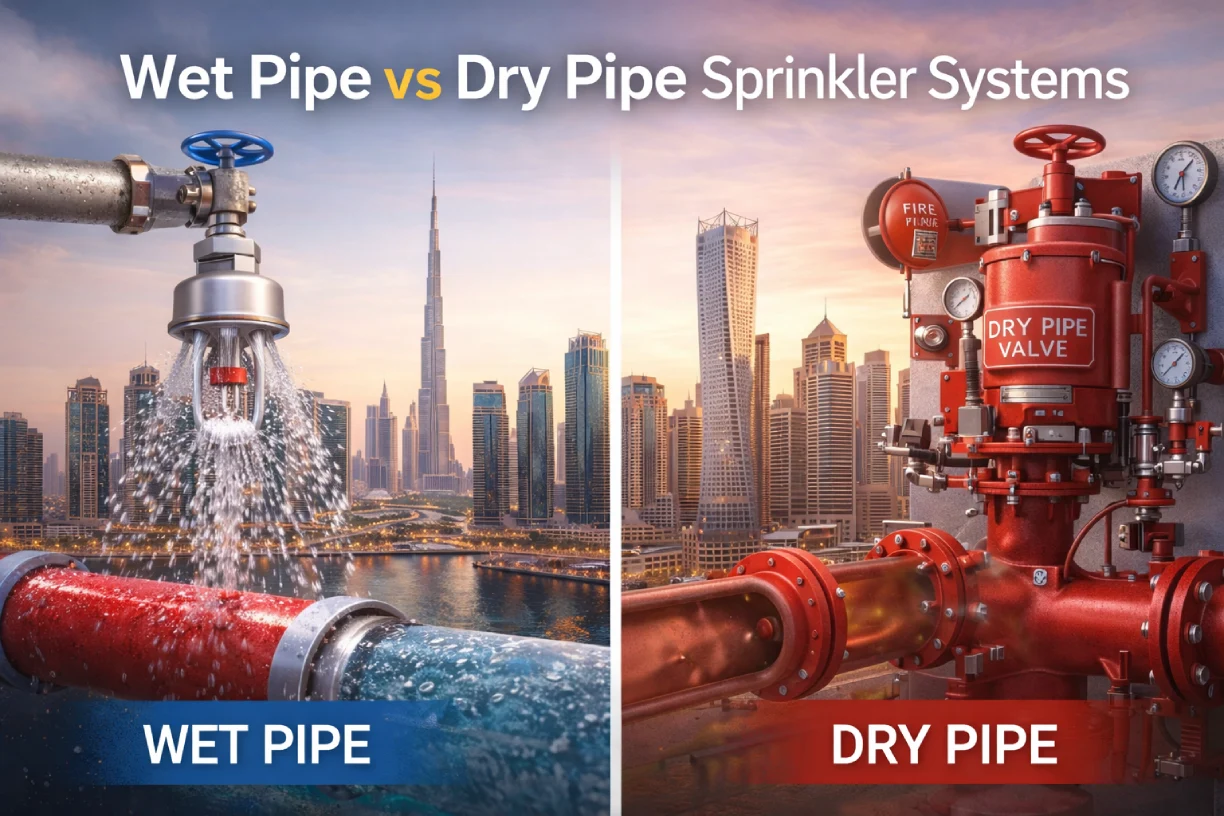
Wet pipe sprinkler systems are the most installed type of automatic sprinkler system. They are straightforward, reliable, and designed for rapid activation. The pipes remain filled with water under constant pressure, ready to discharge as soon as a sprinkler’s head is triggered. These systems provide immediate fire suppression and are suitable for a wide range of heated indoor environments.
What a Wet Pipe Sprinkler Systems Work
In wet pipe systems, each sprinkler head contains a heat-sensitive element. When the surrounding temperature reaches the activation threshold, the element breaks, allowing water to flow immediately from the pipe network. This ensures fast suppression of flames, limits fire spread, and reduces property damage. The simplicity of the system, with minimal moving parts, contributes to consistent reliability and low maintenance requirements.
Where Wet Pipe Sprinkler Systems Are Most Suitable
Wet pipe systems are best suited to environments where freezing is not a concern. Typical applications include offices, retail spaces, heated warehouses, and other controlled indoor environments. They provide efficient, low-maintenance protection in locations where water in the pipes can remain in liquid form at all times. Wet systems are generally avoided in unheated or cold areas, where freezing could compromise performance.
Dry Pipe Sprinkler System Overview
Dry pipe sprinkler systems are designed for conditions where water-filled pipes may be at risk of freezing. They replace water in the pipe network with pressurized air or nitrogen, which is released when a sprinkler head activates, allowing water to flow only now of fire detection. These systems maintain automatic protection while preventing freeze-related failures.
What a Dry Pipe Sprinkler Systems Operate
When a fire triggers a sprinkler head in a dry pipe system, the air pressure in the pipes drops, opening a mechanical valve. Water then enters the network and is discharged through the sprinkler heads. This system introduces a slight delay in water delivery compared with wet pipe systems, but modern designs still achieve rapid suppression and maintain high reliability in cold environments.
Where Dry Pipe Sprinkler Systems Are Most Suitable
Dry pipe systems are ideal for unheated warehouses, cold storage facilities, parking areas, and other spaces at risk of freezing. They are also used where environmental conditions could damage water-filled pipes, such as external canopies or uninsulated areas. Dry systems ensure fire suppression remains operational in conditions that would compromise wet pipe systems.
Comparing Wet and Dry Sprinkler Systems
Selecting between wet and dry sprinkler systems depends on the building environment and fire risk. Wet pipe systems provide immediate water discharge, simple design, and low maintenance, making them highly reliable in heated, freeze-free spaces.
Dry pipe systems are suited to unheated or cold areas, preventing frozen pipes while maintaining operational integrity. Wet systems are not suitable for freezing conditions, whereas dry systems have a slight delay in water delivery and require more complex maintenance.
Both types involve installation, inspection, and operational costs that should be considered when choosing the most appropriate solution.
Applications Across Facilities
Sprinkler system selection varies depending on the type of facility, ambient temperature, fire risk, and occupancy. Choosing the correct system ensures effective fire suppression while preventing damage to property and critical assets, making tailored solutions essential for each environment.
- Warehouses and Cold Storage: Large warehouses and cold storage areas often require dry pipe systems to prevent freezing, while heated warehouses can use wet pipe systems. Decisions should consider stored materials, occupancy levels, and the specific fire hazards present.
- Parking Areas: Open or partially exposed parking facilities may be subject to temperature fluctuations. Dry pipe systems are ideal in colder climates, whereas covered, heated areas can be protected with wet pipe systems.
- Data Centers and Sensitive Facilities: Facilities with sensitive equipment, such as data centers, require rapid suppression with minimal water exposure. Wet pipe systems are suitable in controlled, heated environments, and additional measures can be integrated to reduce risk to critical equipment.
How Lifeco Designs the Right Sprinkler System
At Lifeco, we design sprinkler systems with precision and a focus on safety, reliability, and compliance. Each system is tailored to the specific requirements of the building, fire risk, and operational environment. We integrate wet or dry pipe configurations, select suitable sprinkler heads, fire pumps, valves, and advanced control panels to ensure rapid response and consistent performance.
Our design approach adheres to fire safety regulations while also considering occupancy, stored materials, and critical assets. With over 25 years of experience, a highly skilled engineering team, and the capability to serve projects across 70+ countries, we combine technical expertise with practical solutions. Our systems are designed for durability, minimal maintenance, and seamless integration with other fire protection measures, providing comprehensive, reliable fire safety tailored to each facility’s needs.
 Back
Back


