Fire alarm systems play a crucial role in the safety of modern buildings. Designed to detect and alert people to fire hazards, they provide early warning and enable quick action. With advancements in technology, various types of fire alarm systems are available, each with its own set of features.
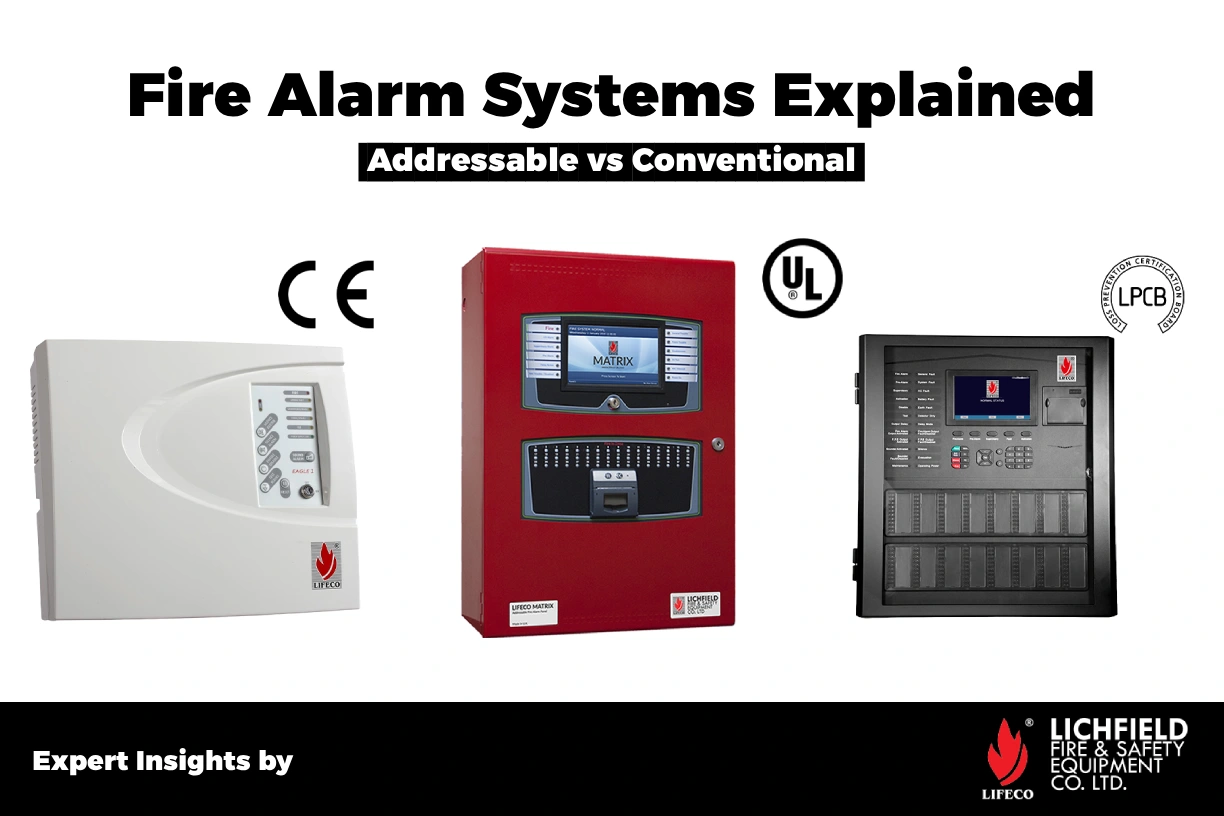
One of the most significant distinctions is between addressable and conventional fire alarm systems. Understanding these differences can help property owners and managers decide which option best suits their needs. Keep reading to discover how addressable fire alarm systems compare to conventional ones.
Understanding Conventional Fire Alarm Systems: How They Work
When it comes to fire safety, understanding conventional fire alarm systems is essential. These systems are often considered a reliable choice for smaller buildings. In a conventional setup, the entire building is divided into zones. Each zone is monitored separately, so if a fire occurs, the system will alert you to the specific area affected. This makes it easier to quickly locate the problem. How zones work is simple yet effective. Each zone in a conventional fire alarm system contains detectors that monitor smoke or heat.
When a detector is triggered, the system activates the alarm and alerts you to the exact zone where the issue is located. Unlike more advanced fire alarm system types, conventional systems are straightforward and easy to install. Their simplicity makes them an affordable choice for buildings that do not require a high level of sophistication.
For smaller buildings, the conventional system is often ideal. It provides effective coverage without unnecessary features, delivering a clear and accurate alarm in the event of a fire, all within a system that is both cost-effective and reliable.
Addressable Fire Alarm Systems for Large, Complex Facilities
An addressable fire alarm system offers pinpoint accuracy in identifying the location of a potential issue. Unlike conventional systems, it provides specific information on which device triggered the alarm, making it easier for responders to act quickly and effectively. With device level identification, each unit can be monitored independently, allowing for greater precision when addressing potential hazards. The system highlights exactly which sensor or detector is affected, reducing confusion and ensuring faster troubleshooting.
Speed is critical when it comes to safety. Fire alarm systems with addressable technology enable faster response times. By instantly identifying the issue, the system can direct emergency personnel straight to the affected area. This quick detection minimises damage and can save lives. For large, complex facilities, traditional alarm systems often struggle to keep up.
Addressable systems simplify monitoring and maintenance, offering greater flexibility. Their ability to provide real-time information makes them an ideal choice for businesses with expansive operations.
Understanding the Core Elements of Fire Safety Systems
In any fire alarm system, several key components come together to provide safety and early warning.
- Detectors: Detectors are designed to sense smoke, heat, or gas, triggering the alarm system. Their quick response is crucial in preventing the spread of fire, ensuring any potential threat is detected at the earliest possible moment and activating alarm notification devices.
- Manual Call Points: Manual call points allow individuals to activate the alarm system manually. In the event of a fire or emergency, these call points provide a fast and reliable way to alert others and trigger the fire alarm system for a swift response, activating alarm notification devices.
- Notification Devices: Notification devices such as sirens, alarms, and flashing lights are essential for alerting building occupants. They ensure people are promptly aware of any danger, enabling them to evacuate or act quickly to ensure their safety in a fire emergency, with alarm notification devices playing a key role.
- Control Panels: Control panels manage the entire fire alarm system, monitor detectors, and coordinate alarm notification devices. With various fire alarm panel types available, the right control panel is vital for ensuring efficient operation and enabling prompt emergency responses when needed.
Addressable vs Conventional Fire Alarms: What You Need to Know
When comparing addressable and conventional fire alarm systems, the key difference lies in how the devices communicate. In conventional systems, alarms are triggered by zones, making it difficult to pinpoint the exact location of the fire. In contrast, addressable fire alarm systems offer precise identification by linking each device to a specific address, providing quicker response times and better accuracy.
- Cost: The initial cost of conventional fire alarm systems is generally lower than that of addressable systems. However, when considering installation and maintenance costs, addressable fire alarm systems may become more economical over time. The ability to monitor individual devices reduces the need for frequent repairs, potentially lowering long-term expenses.
- Scalability: Scalability is a significant advantage of addressable fire alarm systems. These systems allow for easy expansion, as additional devices can be connected to the existing network with minimal disruption. Conventional systems, on the other hand, may require extensive rewiring or a full upgrade to accommodate new zones or areas.
- Maintenance Needs: Conventional systems often require more regular maintenance, as each zone must be manually inspected. Addressable fire alarm systems, however, enable remote diagnostics and fewer physical checks, resulting in reduced maintenance time and costs.
- Accuracy: When comparing the accuracy of addressable and conventional fire alarm systems, the difference is clear. Addressable fire alarm systems provide real-time data on the status of each device in the network. With an addressable fire alarm loop system, the exact location of an issue is pinpointed instantly.
Essential Fire Alarm Installation Tips: How Lifeco Ensures Safety
When it comes to wiring and installation requirements for fire safety systems, proper planning is essential. With a focus on precision and safety, Lifeco guarantees that your fire alarm system wiring and installation will be handled with the highest level of care, providing a reliable solution for fire detection and prevention. Installation should always follow the latest safety standards, ensuring all wiring is robust and correctly routed. When setting up a smoke detection system, make sure cables are carefully laid out to avoid damage and ensure smooth operation.
Choosing the correct type of cable is critical. The right cables can prevent breakdowns during an emergency, ensuring that your intelligent fire alarm system works as intended. The use of fire alarm cables plays a crucial role in maintaining the system’s reliability. These cables are specifically designed to withstand high temperatures and are often fire resistant. Proper protection, such as conduits, helps safeguard the cables, ensuring that all components work seamlessly when it matters most.
Tailoring Fire Alarm Systems to Industry Needs: A Practical Guide
When selecting fire alarm systems, knowing when to use addressable or conventional systems can make all the difference. Here is a guide for different industries:
- Hotels: For hotels, addressable fire alarm systems are ideal. With multiple rooms and floors, an addressable system allows for pinpoint accuracy in identifying the exact location of a fire. It ensures quicker responses and enhances guest safety.
- Factories: Factories often require fire alarm systems for warehouses that can handle large, open spaces with multiple hazards. A conventional system may be more appropriate here, as it provides simple and effective coverage. However, in larger or more complex factories, an addressable system could be beneficial for quicker detection in specific zones.
- Hospitals: In hospitals, where time and accuracy are critical, addressable fire alarm systems are highly recommended. They can quickly identify which room or ward is affected, reducing response times and ensuring patients are safely evacuated without confusion.
- Education Campuses: Universities and schools often have large campuses with diverse building types. A conventional system may work for smaller buildings or halls. However, for larger facilities, addressable systems offer the benefit of quick and clear alerts, improving safety across the campus.
 Back
Back