Industries / Data Centers & Digital Infrastructure
Data Center Fire Protection Systems for Mission-Critical Infrastructure
LIFECO manufactures and supplies UL-listed and FM-approved gaseous fire suppression, detection and pre-action systems for data centers, server rooms and telecom facilities across the UAE, Saudi Arabia, the UK and 70+ countries, protecting uptime without putting electronics or people at risk.
Prefer to talk it through? +971 4 883 4070 or sales@lifeco-uk.com
Speak to a Fire Protection Engineer
Tell us about your facility and we'll recommend the right certified system.
The Risk Profile
Why Data Center Fire Protection Needs a Different Approach
Data centre fire protection has to account for more electrical energy, capital equipment and business risk per square metre than almost any other building type.
A single incident can take critical systems offline, breach client SLAs, and destroy hardware that water or residue-based suppression would only compound. Facilities also run unmanned for long stretches, which means detection and suppression have to work correctly the first time, without a person present to intervene, while remaining safe if staff are on site.
That combination of high energy density, zero tolerance for water or residue, contractual uptime targets and strict frameworks such as NFPA 75, NFPA 76 and TIA-942 is why data centers are specified with gaseous fire suppression rather than conventional sprinklers.
01
NFPA 2001 compliant
Designed and tested to the global standard for clean agent systems.
02
UL-listed & FM-approved
Independently certified components, accepted by insurers and authorities.
03
Zero residue
No water, powder or clean-up. Servers stay dry and back online fast.
04
Safe for occupied spaces
Discharge concentrations stay within safe limits for people in the room.
05
EPA-recognised agents
Environmentally accepted agents with zero ozone depletion potential.
06
Total-flooding protection
Agent fills the whole enclosure, reaching fires inside racks and sub-floor voids.
Our Solutions
Data Center Fire Suppression Systems and Solutions

Featured System
SUPREME-X Inert Gas Fire Extinguishing System
A total-flooding N₂/Ar/CO₂ inert gas blend that extinguishes fire by reducing oxygen concentration, leaving zero residue and no risk to servers, switchgear, or occupants.
• N₂ / Ar / CO₂ inert gas blend, total-flooding discharge
• Zero residue, no cleanup and no downtime for electronics
• Safe for occupied spaces at design concentration
• NFPA 2001 compliant, UL-listed, FM-approved, EPA-recognised
• Meets IG-01 / IG-541 / IG-55 / IG-100 standards
Typical oxygen at discharge
12.5% O₂
0%
Normal air, 21%
Below combustion threshold

SUPREME-X HFC-227ea Clean Agent Systems
Chemical clean agent suppression for tighter plant-room footprints.

SUPREME-X FK-5-1-12 Clean Agent System
Low-storage-volume clean agent suppression for constrained spaces.
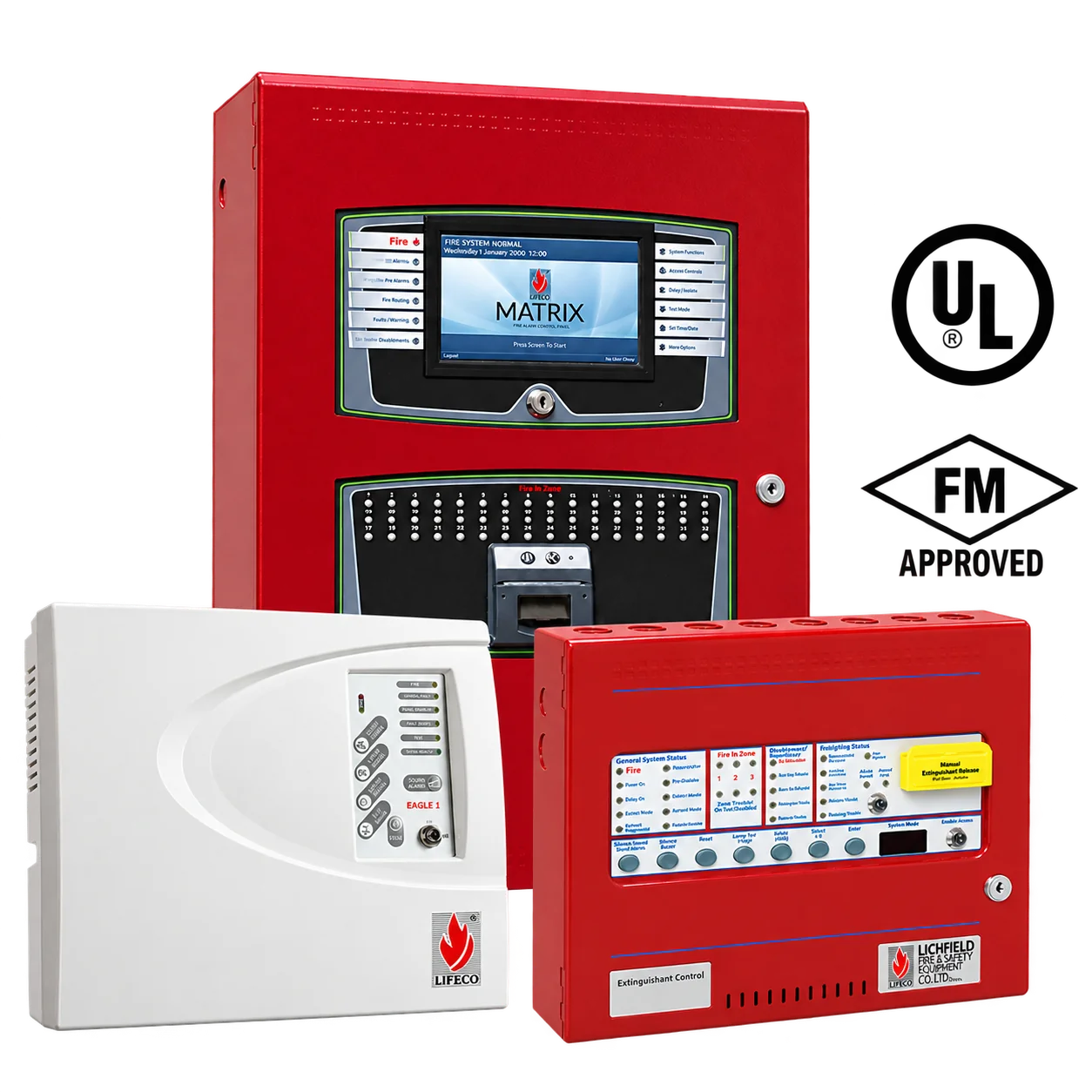
Fire Detection & Alarm Systems
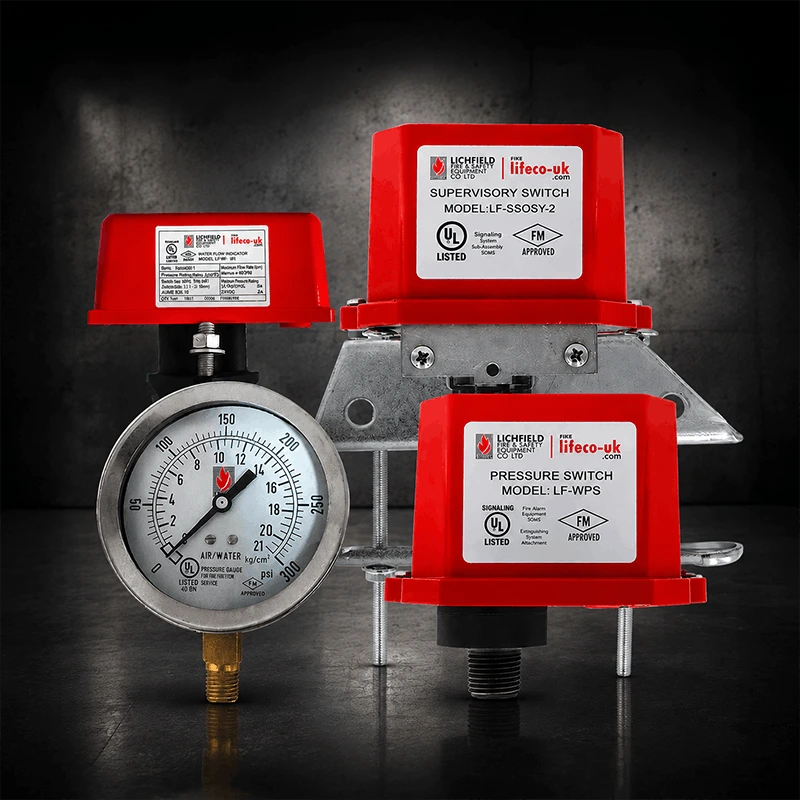
Addressable detection and Hawk extinguishant release panels integrated with suppression control.
Choosing between inert gas and clean agent: inert gas is typically specified where space allows for a larger cylinder footprint and where environmental credentials matter most; chemical clean agents suit tighter plant rooms where a smaller storage footprint is the priority. Both extinguish without water, residue, or downtime for cleanup.
Certifications & Accreditations


The Hazards
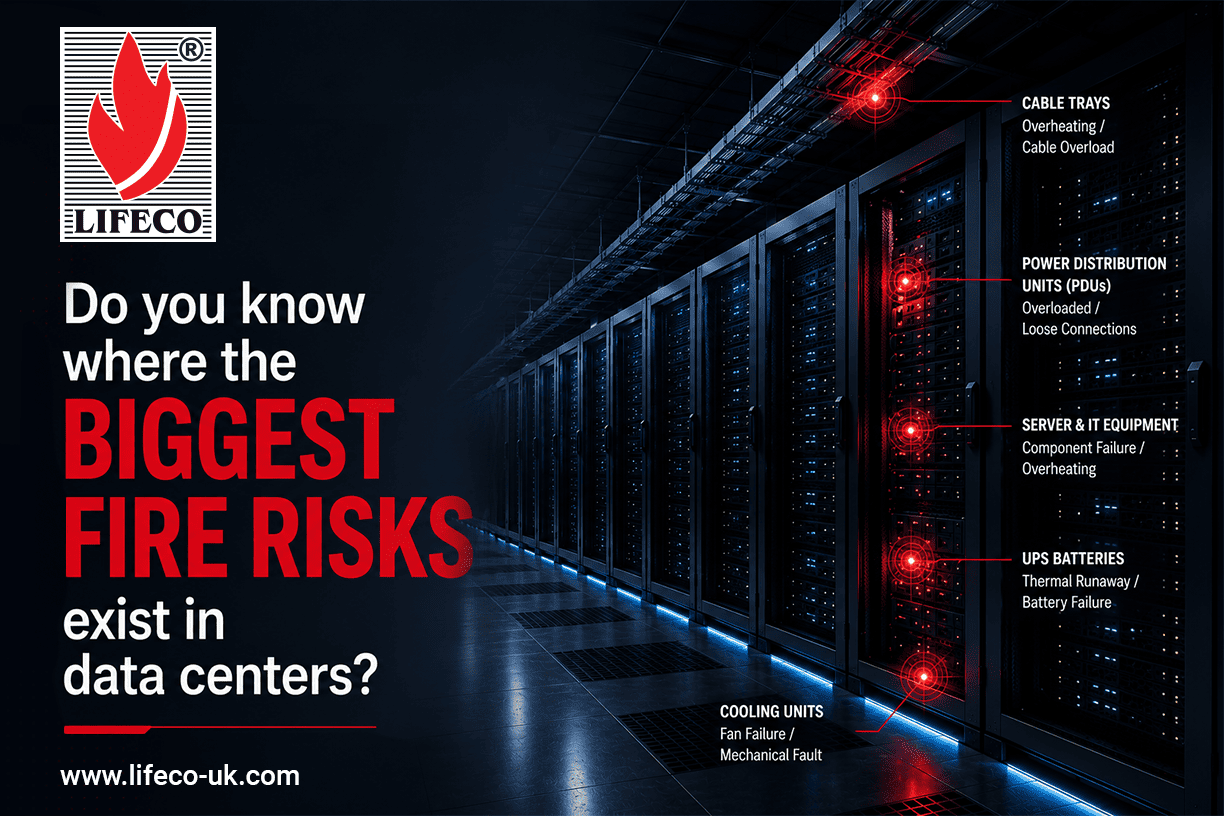
Understanding Fire Risks in Data Centres
01
Electrical & Overheating Faults
High-density power distribution and switchgear create continuous ignition risk in energised spaces.
02
Lithium-ion UPS / BESS Thermal Runaway
Battery rooms present a fast-escalating, self-sustaining fire risk that surface suppression alone can't cool.
03
High-Density AI & GPU Racks
Extreme power and heat loads in AI compute halls raise both ignition probability and fire severity.
04
Cabling & Sub-Floor Voids
Concealed plenum spaces and cable runs can spread smoke and fire undetected through air-handling paths.
57%
of data centre operators said their most recent major outage cost more than $100,000, and 1 in 5 reported costs above $1 million.
Built for Your Facility
Data Center Fire Suppression Solutions by Facility Type
01
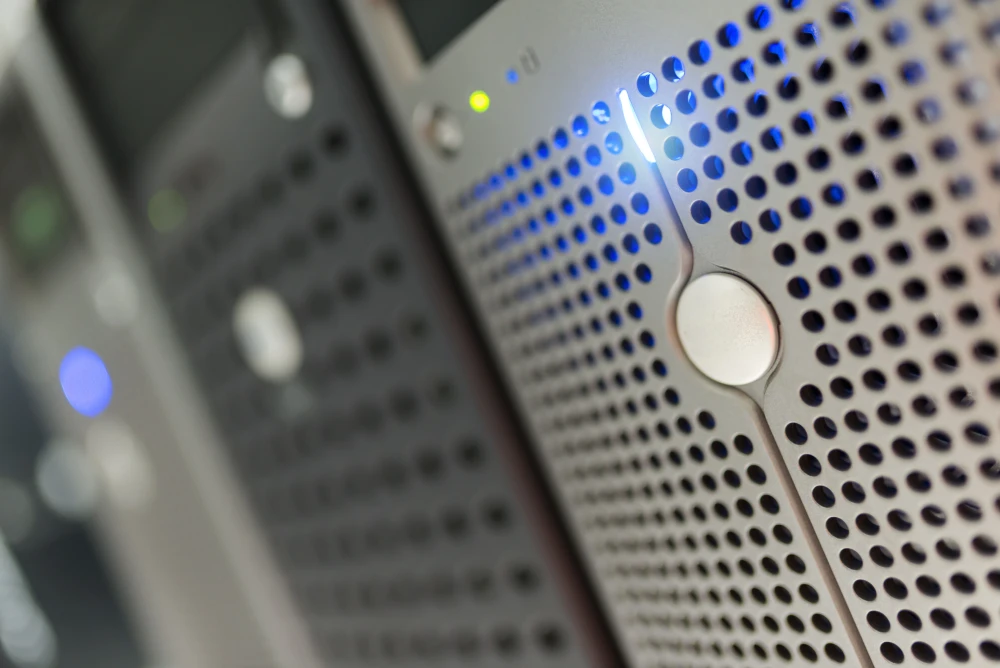
AI Data Centers
Extreme power-density GPU clusters demand suppression engineered for very high heat loads and rapid detection.
Specific Risks
Thermal runaway from dense GPU racks; high electrical fault energy; rapid fire growth in compute halls.
Requirements
Ultra-fast detection; total-flooding agent sized for high room volumes; redundancy for 24/7 uptime.
Target Audience
AI infrastructure operators, hyperscale GPU cluster owners, cloud AI providers.
Recommended LIFECO Solutions: SUPREME-X inert gas total flooding, addressable early-warning detection, pre-action sprinkler valves for support areas.
02
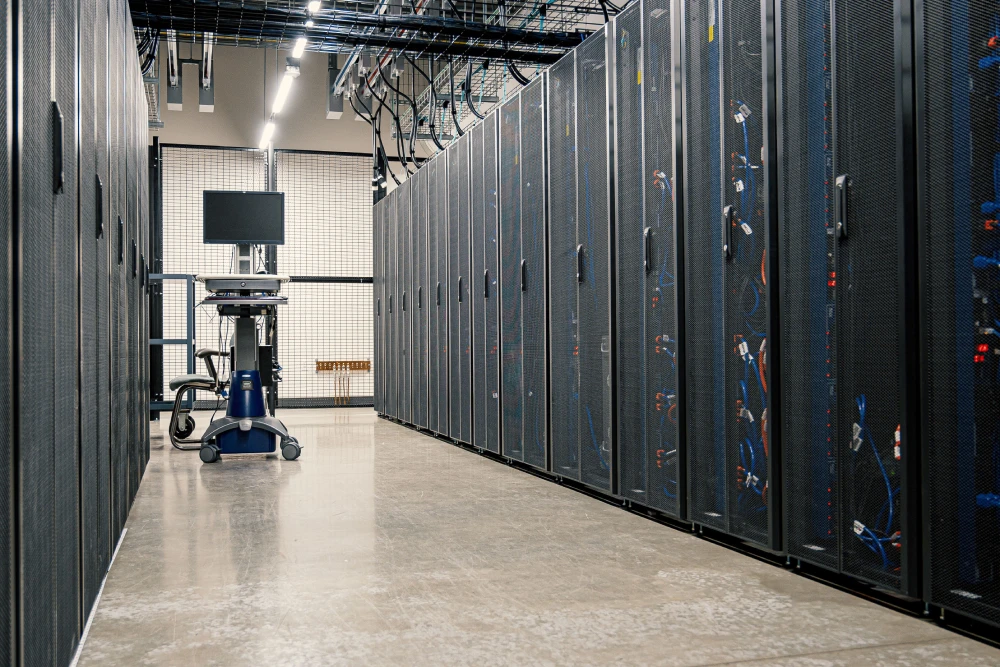
Enterprise Data Centers
In-house IT operations supporting core business functions need dependable, cost-effective protection.
Specific Risks
Legacy electrical infrastructure; mixed IT/office occupancy; budget-driven system choices.
Requirements
NFPA 75 compliant suppression; integration with existing fire alarm; minimal disruption to live operations.
Target Audience
Corporate IT managers, facilities directors.
Recommended LIFECO Solutions: SUPREME-X or HFC-227ea clean agent systems, integrated detection and alarm.
03
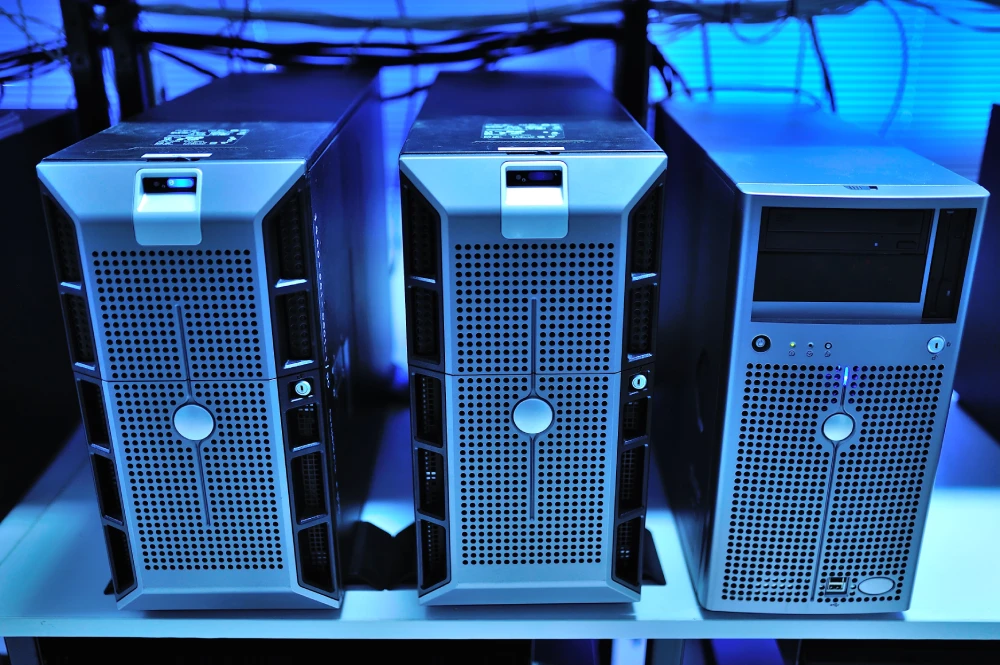
Colocation Data Centers
Multi-tenant halls require compartmentalised suppression that protects one tenant’s cage without affecting neighbours.
Specific Risks
Shared infrastructure; tenant-introduced equipment risk; compartment breach.
Requirements
Zone-based suppression per cage or suite; tenant SLA compliance; minimal cross-contamination.
Target Audience
Colocation providers, multi-tenant facility operators.
Recommended LIFECO Solutions: Zoned SUPREME-X systems per suite, independent detection zones, compartment fire-stopping coordination.
04
Hyperscale Data Centers
Large-scale halls need total-flooding systems that can be rolled out in phases as capacity grows.
Specific Risks
Very large room volumes; phased construction; high capital equipment density.
Requirements
Scalable cylinder banks; phased commissioning; high-volume total-flooding calculations.
Target Audience
Hyperscale cloud operators, large-scale build-to-suit developers.
Recommended LIFECO Solutions: Multi-zone SUPREME-X inert gas, modular cylinder banks, phased system design.
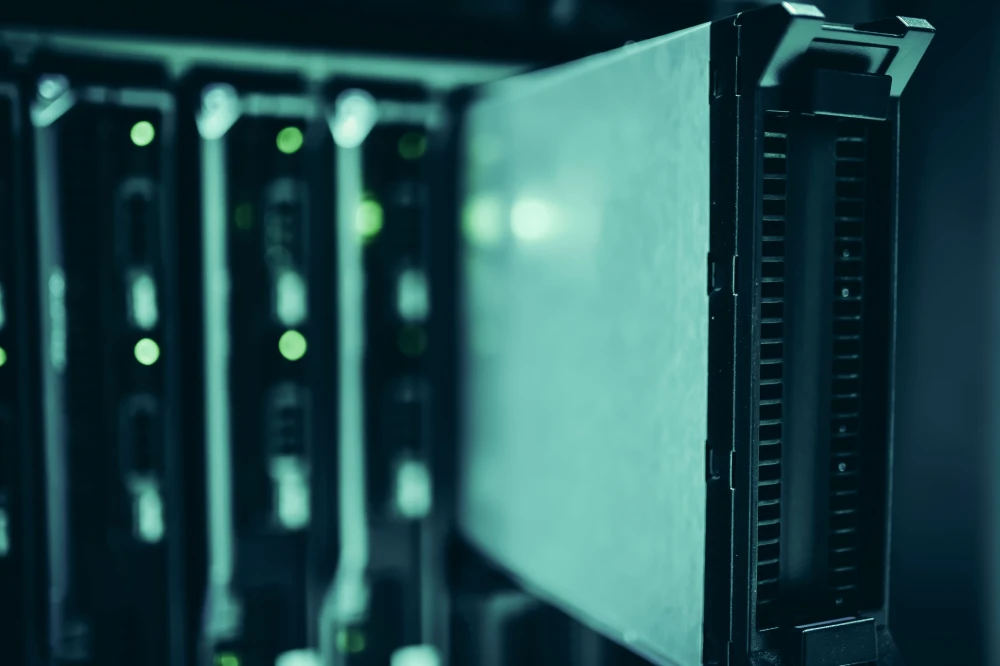
05
Edge Data Centers
Small, often unmanned footprints near end users need compact, low-maintenance suppression that performs without an on-site engineer.
Specific Risks
Remote or unmanned locations; limited space for cylinders; delayed response times.
Requirements
Compact self-contained suppression; remote monitoring; minimal maintenance.
Target Audience
Telecom edge operators, regional edge compute providers.
Recommended LIFECO Solutions: Compact SUPREME-X units, self-contained clean agent systems, remote detection monitoring.
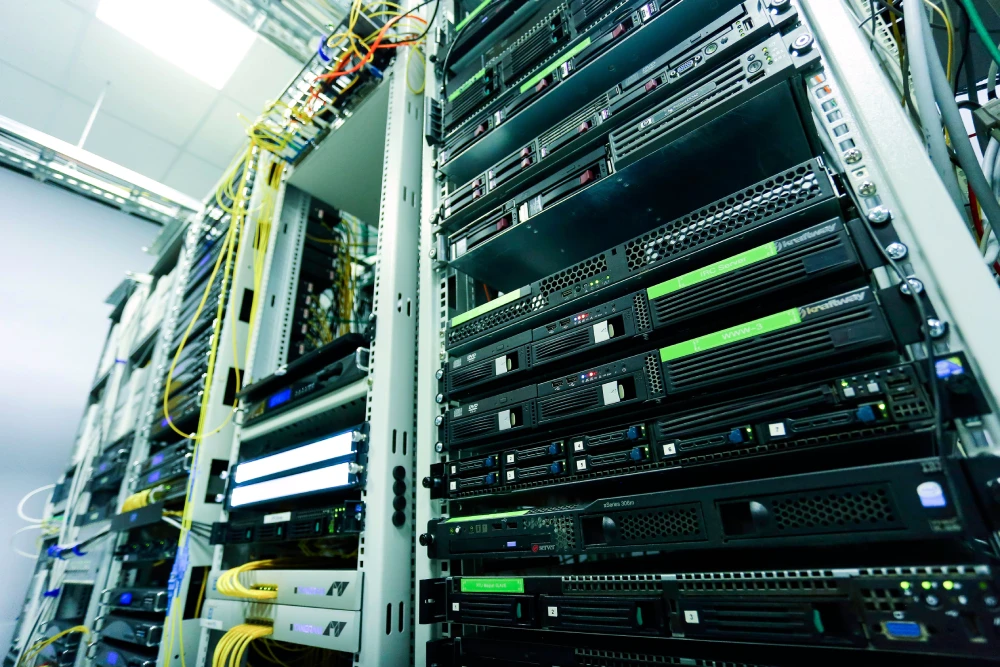
06
Cloud Computing Facilities
Always-on platforms bound by strict SLA availability need suppression that can’t itself become a downtime risk.
Specific Risks
SLA penalties from any downtime; dense virtualised server racks; continuous operation.
Requirements
Zero-downtime-risk suppression; safe for occupied maintenance windows; rapid restart after discharge.
Target Audience
Cloud service providers, SaaS infrastructure teams.
Recommended LIFECO Solutions: SUPREME-X inert gas (zero residue, fast restart), addressable early-warning detection.
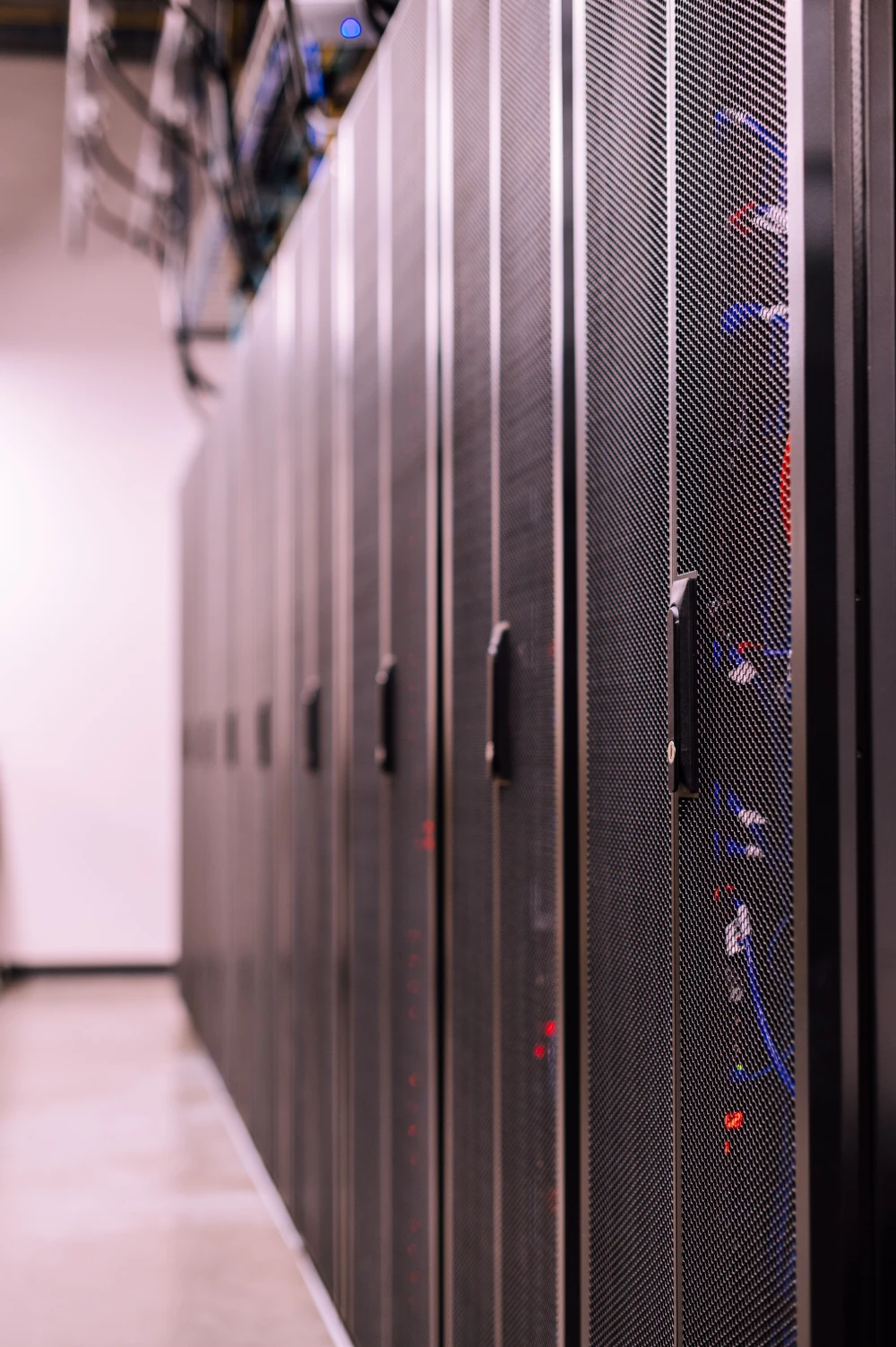
07
High-Performance Computing Facilities
Dense-compute research halls protecting expensive modelling and simulation assets need suppression matched to extreme thermal loads.
Specific Risks
Very high power density; expensive, irreplaceable compute assets; research continuity pressure.
Requirements
Rapid total flooding; no risk to sensitive research equipment; compliance with research institution codes.
Target Audience
Research institutions, national labs, HPC cluster operators.
Recommended LIFECO Solutions: SUPREME-X total flooding, clean agent for smaller HPC rooms, addressable early-warning detection.

08
Disaster Recovery Data Centers
Redundancy sites must match the primary facility’s protection standard so failover never means a downgrade in fire safety.
Specific Risks
Intermittent occupancy; lower day-to-day monitoring; mismatch with primary site protection.
Requirements
Protection parity with the primary site; remote monitoring during dormant periods; rapid reactivation readiness.
Target Audience
Business continuity planners, DR site operators.
Recommended LIFECO Solutions: SUPREME-X matching primary-site specification, remote system health monitoring.

09
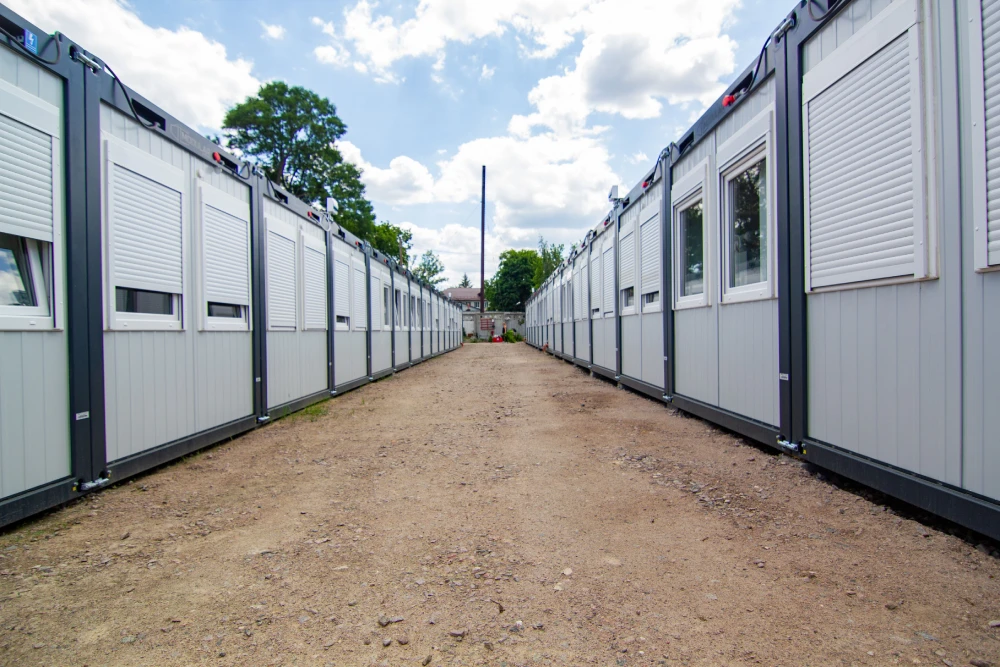
Modular Data Centers
Pre-engineered, containerised deployments need suppression that ships as a factory-fitted module.
Specific Risks
Confined container volumes; transport vibration; rapid deployment timelines.
Requirements
Factory-fitted suppression; compact cylinder footprint; pre-commissioned systems.
Target Audience
Modular and containerised data centre manufacturers, rapid-deployment operators.
Recommended LIFECO Solutions: Pre-engineered SUPREME-X or clean agent packages sized for container volumes.
10
Telecom Switching Centers
Critical network infrastructure demands suppression with zero tolerance for service interruption.
Specific Risks
Dense switching equipment; network-wide outage impact; ageing exchange buildings.
Requirements
NFPA 76 compliance; no interruption to network services; integration with network operations monitoring.
Target Audience
Telecom operators, network infrastructure providers.
Recommended LIFECO Solutions: SUPREME-X inert gas, clean agent for smaller exchanges, integrated detection.
11
Network Operations Centers
Manned control rooms need suppression that is unquestionably safe for the staff who work there around the clock.
Specific Risks
Continuous staff presence; high-value monitoring equipment; need for rapid re-entry after any incident.
Requirements
Occupied-space-safe agent concentration; rapid post-discharge re-entry; integration with control room systems.
Target Audience
NOC operators, managed service providers.
Recommended LIFECO Solutions: SUPREME-X inert gas (safe at design concentration), clean agent alternative, integrated detection and alarm.

12
Server Rooms & IT Rooms
Compact commercial and enterprise IT rooms need space-efficient protection sized to smaller room volumes.
Specific Risks
Confined room volumes; mixed-use building occupancy; retrofit constraints.
Requirements
Small-footprint cylinder options; straightforward retrofit into existing rooms; NFPA 75 compliance.
Target Audience
SMB IT managers, commercial building facilities teams.
Recommended LIFECO Solutions: Compact SUPREME-X or FK-5-1-12 clean agent units, standalone detection and alarm.
Compliance
Data Centre Fire Suppression Standards & Compliance
Insurers, authorities having jurisdiction and tenants expect data centre suppression to meet recognised standards. These four define how systems are designed, specified and tested.
UL listed and FM approved agents and hardware
Designed to NFPA 2001 and ISO 14520
Room integrity testing to verify 10-minute agent retention
NFPA 75
US
Fire Protection of IT Equipment
Governs the design of information technology equipment areas and their fire protection.
APPLIES TO
IT rooms
Data halls
NFPA 2001
US
Clean Agent Fire Extinguishing Systems
Sets discharge times and a minimum 10-minute agent hold time (or longer where the authority having jurisdiction requires) for gaseous systems.
APPLIES TO
Inert gas
Clean agents
NFPA 76
US
Telecommunications Facilities
Fire protection requirements specific to telecom switching and network facilities.
APPLIES TO
Telecom
NOCs
ISO 14520
INTERNATIONAL
Gaseous Fire-Extinguishing Systems
International standard for the design and testing of gaseous fire-extinguishing systems.
APPLIES TO
All gaseous systems
UAE & KSA Requirements
In the UAE, data centre fire protection must comply with the UAE Fire & Life Safety Code of Practice and be approved by Civil Defence; in Saudi Arabia, systems follow Saudi Civil Defense requirements with products registered through SASO SABER. LIFECO supplies UL-listed and FM-approved systems with the datasheets and certificates needed for approval submissions. Read more: NFPA vs UAE Fire Code · UAE Civil Defence approval
Inert Gas vs. Clean Agent Fire Suppression: Which Is Right for Your Data Centre?
Agent
How It Works
Discharge Time
Environmental
Storage Footprint
Best For
Reduces oxygen concentration
60–120s
0 GWP / 0 ODP
Larger cylinder bank
Occupied spaces, long-term compliance
Agents are listed by their generic names. FM-200 and Novec 1230 are third-party trade names; LIFECO SUPREME-X clean agent systems use HFC-227ea and FK-5-1-12 agents. Discharge times follow NFPA 2001.

27
Years of Excellence
SINCE 1999
Why LIFECO
Celebrating 27 Years of Excellence
LIFECO (Lichfield Fire & Safety Equipment Co. Ltd) is a UK fire protection manufacturer, founded in 1999 and headquartered in Birmingham, with offices in Riyadh and Jebel Ali Free Zone, Dubai. Backed by a highly skilled workforce, our certified product range is supplied to projects in more than 70 countries.
10,000
+
Projects delivered
100
+
Certificates
70
+
Countries
7,000,000
+
Fire sprinklers
5,000
+
Clients & partners
OPERATING IN
United Kingdom
Saudi Arabia
UAE
Industry Spotlight
Data Center Fire Suppression, Explained
Risks, standards, agent comparisons and recommended systems for every type of data center, in one guide.
12
facility types covered
NFPA 2001
& ISO 14520 compliant


FAQ
Data Center Fire Suppression FAQs
Straight answers on choosing, specifying, and certifying fire suppression systems for data centers and server rooms.
What is the best fire suppression system for a data center?
For most data centers and server rooms, an inert gas (IG-541/IG-55/IG-100) system such as SUPREME-X is the preferred choice: it extinguishes fire through total flooding without water, chemical residue or risk to electronics, and it’s safe for staff who may be present. Chemical clean agents (HFC-227ea, FK-5-1-12) are a strong alternative where cylinder storage space is limited.
Is inert gas fire suppression safe for occupied server rooms?
Yes. Inert gas agents are naturally occurring and NFPA 2001 compliant at design concentrations that remain safe for people in the protected space, which is why they’re widely specified for manned control rooms and NOCs as well as unmanned server halls.
What’s the difference between inert gas and chemical clean agent suppression?
Inert gas systems (N₂, Ar, CO₂ blends) work by lowering oxygen concentration below combustion levels, need a larger cylinder footprint, and carry no global warming potential. Chemical clean agents (HFC-227ea, FK-5-1-12) work chemically at lower storage volumes, making them useful where plant-room space is constrained.
What fire code applies to data centers in the UAE?
The UAE Fire & Life Safety Code of Practice, enforced by Civil Defence in each emirate, governs data centre fire protection. It references NFPA standards, so gaseous suppression is typically designed to NFPA 2001, and systems and products need Civil Defence approval before use. Read our guide to UAE Civil Defence approval.
How long must a clean agent system hold its concentration?
NFPA 2001 requires the design concentration to be held for at least 10 minutes, or longer where the authority having jurisdiction requires it. A room integrity test confirms the protected enclosure can retain the agent for that hold time.
Do data centers need fire detection as well as suppression?
Yes. Suppression only activates once a fire is confirmed, so early-warning detection, such as addressable smoke and heat detection linked to an extinguishant release panel, is essential to catch a developing fault before it escalates and to trigger discharge automatically.
Is inert gas fire suppression compliant with NFPA 2001?
Yes. Inert gas systems such as SUPREME-X are designed and tested to NFPA 2001, the US standard for clean agent fire extinguishing systems, and are UL-listed and FM-approved for use in data centers and other mission-critical spaces.
What standards should a data center fire suppression system meet?
Look for design to NFPA 2001 or ISO 14520, with UL listing and FM approval for the agent and hardware, alongside facility frameworks such as NFPA 75, NFPA 76 and TIA-942. In the UAE, systems must also meet the UAE Fire & Life Safety Code and be approved by Civil Defence.
Can a data center suppression system be refilled after discharge?
Yes. SUPREME-X inert gas cylinders are refilled with gas, while HFC227ea and FK5112 cylinders are refilled with agent or replaced, restoring the system to full readiness. LIFECO supplies refill agent and replacement cylinders for its systems.
How much space does inert gas need compared with a clean agent?
Inert gas is stored as compressed gas in 200 or 300 bar cylinders and needs significantly more storage space than a chemical clean agent protecting the same room. HFC-227ea has the smallest footprint and FK-5-1-12 is moderate, so clean agents are usually chosen where plant-room space is tight.
Engineered to
Protect What
Never Stops
Get in Touch
Send Us Your Queries
Whether you're a consultant specifying suppression at design stage, a contractor sourcing equipment for a fit-out, or a facility manager planning an upgrade, our team will help you select the right certified system for your site.
 Back